
While public transportation may not be the sexiest topic of the blogosphere, to us with physical disabilities it is one of the most important. Perhaps sexy is subjective! Conventional wisdom stressed that I my first blog post be about the area where I live, where I’m a real expert. But where’s the fun in that? I’ve never been one to follow conventional wisdom anyway. A recent visit from the charming and gracious King Charles III inspired me to start with my recent stay in England. It was a real adventure learning to navigate their public transportation on my own, and when I thought about what was the one blog I wish I had when I was there, this is it.
I’ve always wanted to explore the world, and I’ve treated my own country like it’s my back yard. Busy careers and health issues made it seem like my husband and I would never be able to get away together. I began to realize if I was ever going to do it, I would have to do it on my own. That’s exactly what I did. I chose the UK for my first European destination because it’s the land of the majority of my ancestors. I was eager to see where they lived and where I came from. I also thought that it would be easier to acclimate myself to international travel with a wheelchair in a county that speaks the same language. I’d spent a summer in Mexico years ago, but it was before I needed a mobility aid and it was somehow less intimating. I have a rare disease called Ehlers-Danlos Syndrome. It causes mobility issues (among many others) and I require mobility aids if walking very far at all, like through an airport for instance.
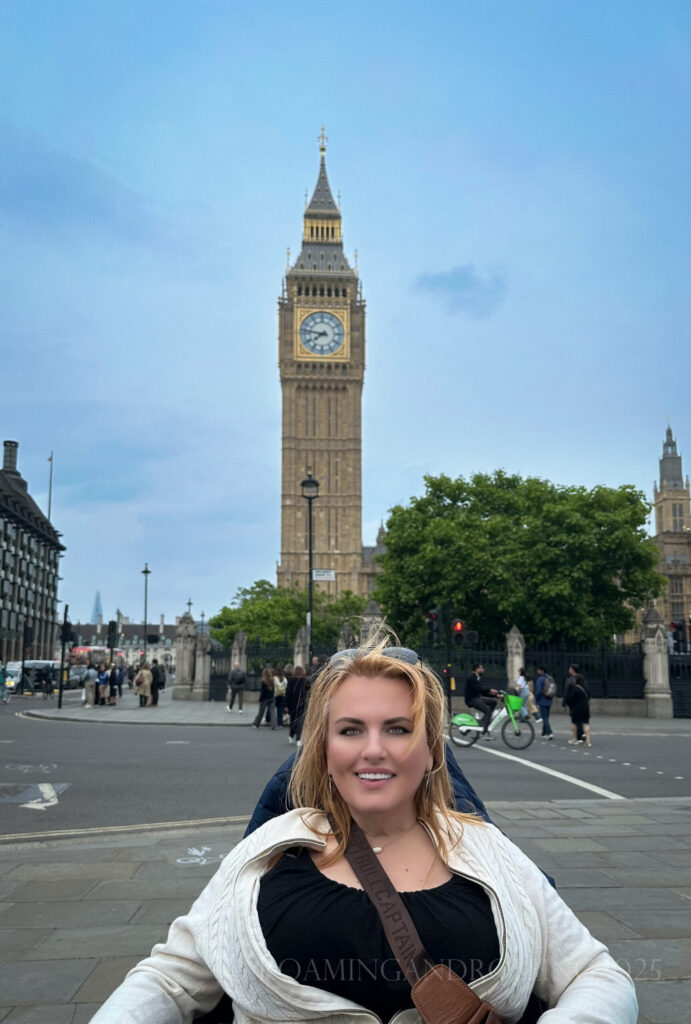
I purchased a one-way ticket to London and stayed in a hotel in Canary Wharf, the Business District, situated on the Thames. It was a delightfully accessible area, as if most of the city. I was anxious at first about getting around, especially since my first attempts at public transportation was with Uber and it did not go well. The app showed several cars nearby that were wheelchair accessible, but they would never accept my ride. During several months there, only one accepted. Since I have a lightweight folding wheelchair that easily fits in any trunk, I just ordered a large Uber like I always do at home and have never had a problem. I add a note telling them that I have a folding wheelchair and will require assistance putting in trunk. The first driver who responded in London took one look at my chair and suitcase, said, “no!” and drove away. I began to worry that I had made a mistake and would have a hard time getting around. Little did I know just how wrong I was about that.
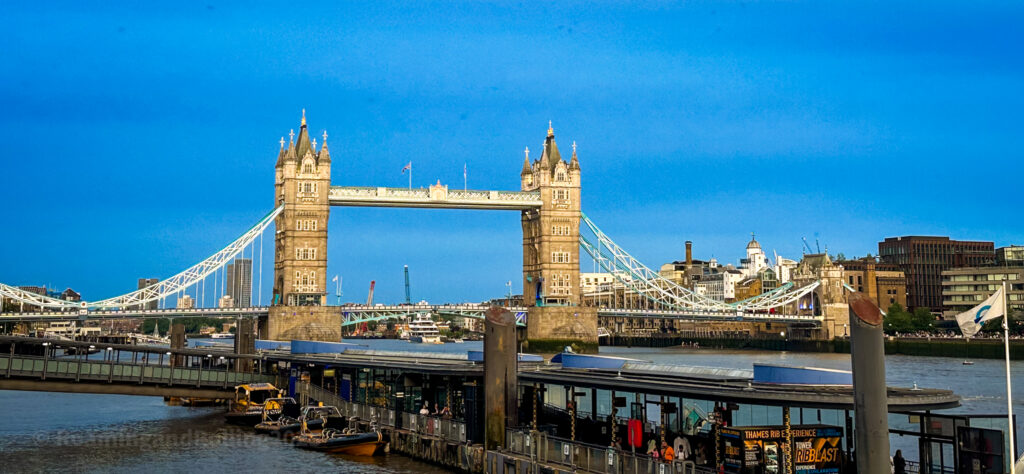
The very first form of public transportation that I mastered was the water taxi on the River Thames. It still remains me favorite. As with all public transport in England, it is accessible and they will help you cross the platform when you board, ensuring that you don’t tip over. There are toilets onboard, too, which is nice, as sometimes they can be difficult to find. With the wind in my hair and the iconic scenery of London passing by I very much felt like Harry Potter flying down the river on his broom. The first time I saw the Tower Bridge was coming up the river on the water taxi, and I’m so thankful it was. It was an overwhelmingly powerful emotional experience for me when it appeared. I suddenly wondered about my ancestors who sailed this very river, what they must have seen and how it differed and what was the same.
I soon ventured to the London Underground, or the “Tube” as they call it. They are so amazingly helpful to people in wheelchairs! Not only the people who work there, but the citizens themselves. When I approached the turnstile, I was asked if required assistance. I learned to tell them that I would require a ramp. This is because even in the area designated for wheelchairs the ground and the train are usually two different levels and it’s not possible to board without a ramp. They will quickly call someone to join you at the train with a ramp and they will put it in place for you to board and ask where you will be deboarding. They will call ahead and have someone waiting for you with a ramp there so you can easily deboard the train. However, if no one is there, the train is always slightly higher than the platform so it’s much easier to deboard the train without a ramp that it is to board. The lite rail is exactly like the Tube, but it’s aboveground.
The stations are wonderful. Not only are the staff polite and helpful, but they keep it clean and very safe. There are often shops, coffee and food available too. They are almost all accessible, save a few of the older ones. If for any reason the lifts are out of order, preventing a disabled person from getting somewhere, they will call you cab at no charge to you to take you there. Everything is very convenient, even the payment process. Pay with wallet app on the phone, tap as you walk by! Also, the city provides a website and app that provides “step-free” routes for people to get around, combining the easiest way to get around combing the all the available transportation for those with mobility issues that do not include and stairs or steps. You plug in your starting and ending points, and it provides a detailed plan of exactly which busses, trains, and paths to take. Its wonderfully handy!
The busses intimidated me most of all. I’ve never taken a bus much at all, and never with my wheelchair. I finally gained the courage to try. It was actually very easy. I simply waited by the double doors where people exit, standing to the side. Sometimes the driver will see you and put down the ramp for you. But normally you push the button by the doors and alert him that you are there. Once the doors open, you roll in and directly inside is the wheelchair section.
Last but not least, some will use the passenger trains. I liked to explore far and wide and I spent a month in the beautiful twice-over World Heritage Site Bath. The hubs and many of the stations have “assistance” offices for passengers with disabilities. They will help with luggage if you call ahead. Or, you can go to the office when you arrive and they are so helpful. They make sure you get to your train and help you get your luggage on. They also arrange for assistance on your arrival.
Once you are comfortable navigating London, you can focus on appreciating the beauty. I especially love how they preserve the integrity of the historic buildings as they retrofit them with modern conveniences and necessities, a complimentary mix of old and new. Just like the skyline of London herself, modern skyscrapers standing next to landmarks from the Middle Ages with striking, contrasting beauty. London is a city proudly charging into the future while always remembering, honoring, and learning from her long and storied past. London also seems to be a city leading the way on accessibility so that everyone can enjoy its grandeur.